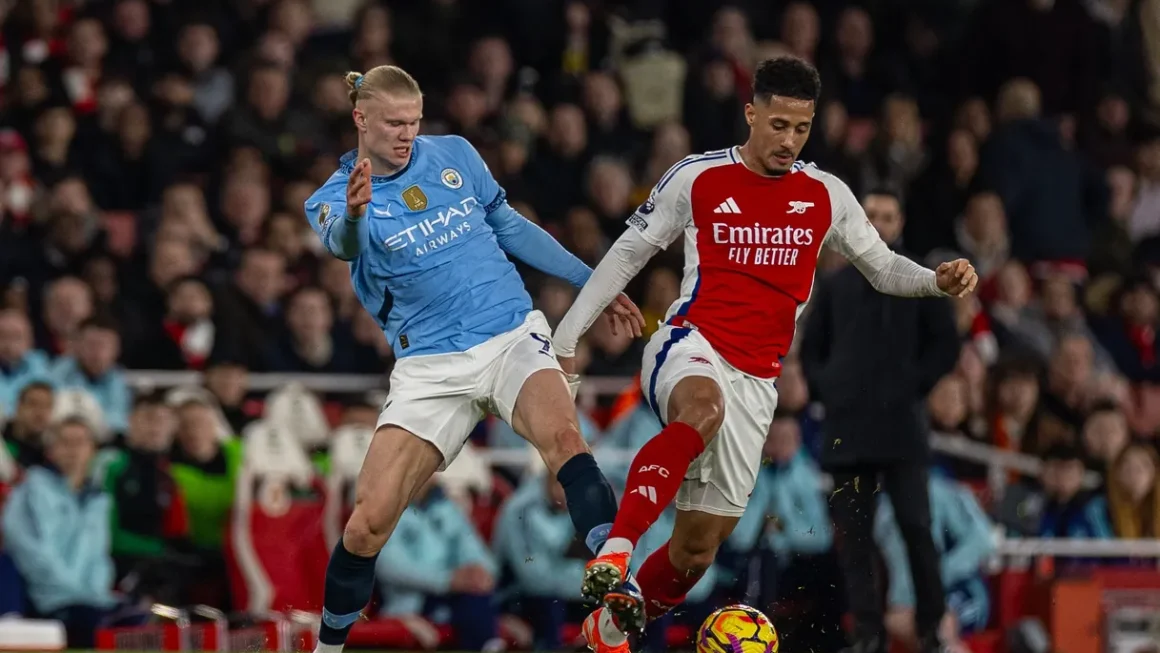


Looking beyond the fast-paced lives we lead in the 21st century, we see that there are still those who view life through a lens that doesn’t see everything as purely materialistic, and this applies to football as well. If we go back to the origins of the game, or even three decades ago to the mid-1990s, we’ll notice that the essence of the game was very different: very similar black boots, loose-fitting team kits, and a lot of fun within the game—everything was more natural.
- read more: Italy dreams of appointing Spanish coach Pep Guardiola!
Today, everything has changed completely. Football used to be reasonably controlled by commercial interests, but now it has become entirely a “business of entertaining people.” The commercial and marketing interference in the game has become noticeable even to your friend who only watches football once every four years and asks you, “What are all these commercials in the middle of the game?” And you must coldly answer him frankly, “The game has changed completely.”
At Foot Africa, we decided to take you on a detailed tour within this investigative report written by Hazem Melhem, to learn more about the financial returns that the United States of America in particular will achieve from this tournament.
A huge financial boost to the US GDP due to the 2026 World Cup
Initial statistics from FIFA and the World Trade Organization indicate that this edition of the tournament will contribute approximately $17.2 billion to the US GDP and will have created 185,000 full-time jobs by the end of the tournament. All this substantial financial revenue is expected to be distributed across multiple revenue streams.
Goldman Sachs indicated that in June alone, the tournament generated the equivalent of $40,000 in tourism-related activities, such as restaurants, hotels, and others. The transportation sector in the United States also benefited from this massive economic and commercial boost.
- read more:Barça shuts the door on a Raphinha exit
With a simple equation, Oxford Economics said, distributing the tournament across 11 different American cities with 104 games and 48 teams, hotel revenues alone would increase by $900 million, a figure equivalent to the revenues of 10 Super Bowl games.
FIFA’s financial profits and estimated global profits from the 2026 World Cup
Having examined the substantial financial gains the United States will reap at the end of the tournament, it’s essential to understand the overall global revenue generated by the event. Recent economic research indicates that this edition, being held in three different countries, will generate record-breaking revenues for FIFA alone, estimated at around $6 billion from broadcasting and sponsorships.
However, American sponsors control approximately 52% of the sponsorship revenue associated with the tournament, while Canada and Mexico contribute nothing. This effectively transforms the tournament into a primarily American commercial venture, as reported by the Financial Express.
Tourism plays a key role in the 2026 World Cup!
Like any World Cup, tourism is expected to generate a significant share of the financial output and economic benefits of the 2026 edition. According to Allianz, the estimated tourism output from this tournament will reach $8 billion by the end of the tournament, with $6.8 billion from foreign tourists and $1.2 billion from domestic tourism spending. The United States receives the largest share of tourism revenue from the World Cup because it hosts 78 out of 104 matches of this tournament on its soil.
A significant gap between expectations and reality
Despite the impressive headline figures, reports suggest that the actual economic impact may fall significantly short of expectations. In an economy the size of the United States — exceeding $30 trillion — a $17.2 billion contribution represents less than 0.1% of GDP. As Goldman Sachs estimates indicate, the long-term effect on economic growth is “effectively zero.”
Host cities are facing considerable financial strain. FIFA does not provide direct cash grants to host cities to cover costs, nor do these cities receive any revenue from ticket sales or concessions. While the Federal Emergency Management Agency has offered $650 million in security grants, the majority of expenses remain the responsibility of local authorities.
These 5 charts show just how unaffordable the 2026 World Cup is for fansBusiness Insider reveals through five charts that attending the 2026 World Cup is prohibitively expensive for most fans, with ticket prices up to seven times higher than initially stated and inflated costs… pic.twitter.com/zjTRjm4zT5
— Excel Tips (@gudanglifehack) July 12, 2026
Furthermore, tourism has not lived up to forecasts. Hotels have been forced to lower their rates, flight bookings from Europe have declined, and the New York Hotel Association has revised its revenue projections downward by 60%, citing high ticket prices and visa difficulties as contributing factors.
Hydration break and the huge economic profit for the channels!
The water breaks at the 2026 World Cup, introduced as a safety measure to protect players from the heat, were one of the most controversial aspects of the tournament, and broadcasters turned them into a lucrative advertising opportunity worth hundreds of millions of dollars.
Regarding the financial gains made by broadcasters from the players’ hydration breaks, Fox Sports alone will receive $250 million, half of what it paid for the rights to broadcast the 2026 World Cup. For example, a single 30-second advertising slot costs an average of $300,000, and can rise to $750,000 during matches featuring the US national team or the final stages on Fox Sports.
FIFA successfully secured broadcasting rights with more than 175 countries and territories worldwide, making it the most widely covered tournament in the competition’s history. Among the most prominent broadcasters are Fox and Telemundo in the US market, BBC and ITV in the UK, Globo and Casi TV in Brazil, and M6 and beIN Sports in France.
At the end of this in-depth sports economic research, the long-term economic results may not be as convincing for America as expected due to factors it has put in place for itself, such as “the difficulty of obtaining visas and the high cost of tickets,” but the improved sports facilities can certainly be used for future projects after the final whistle of this edition.
Piala Dunia 2026
Piala Dunia FIFA 2026 akan menjadi edisi paling revolusioner dalam sejarah sepak bola dunia. Turnamen ini untuk pertama kalinya akan diselenggarakan di tiga negara sekaligus, yaitu Amerika Serikat, Kanada, dan Meksiko. Selain itu, jumlah peserta juga meningkat dari 32 menjadi 48 tim, membuka peluang lebih besar bagi negara-negara dari berbagai konfederasi untuk tampil di panggung global. Format baru ini akan menghadirkan lebih banyak pertandingan, atmosfer kompetisi yang lebih luas, serta jangkauan penonton yang semakin besar di seluruh dunia.
Dengan skala yang jauh lebih besar, FIFA menargetkan turnamen ini sebagai ajang yang tidak hanya kompetitif tetapi juga spektakuler dari sisi teknologi dan pengalaman penonton. Stadion-stadion modern di berbagai kota tuan rumah telah dipersiapkan untuk menghadirkan pertandingan berkelas dunia, didukung oleh inovasi seperti peningkatan sistem VAR dan pengalaman digital bagi fans. diprediksi akan menjadi tonggak baru dalam evolusi sepak bola internasional, memperkuat popularitas olahraga ini sekaligus menciptakan momen-momen bersejarah yang akan dikenang dalam waktu lama.