
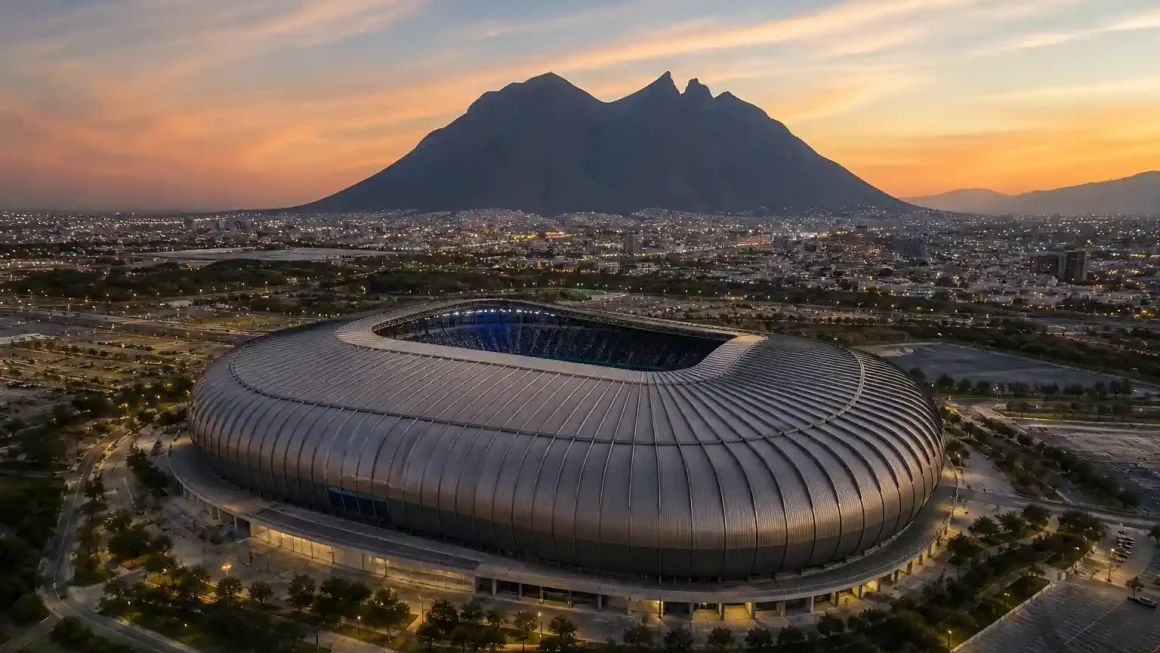
Estadio BBVA is one of the most modern stadiums selected to host the 2026 World Cup in Mexico. This impressive facility, located in Guadalupe, Nuevo León, is part of the Monterrey metropolitan area and is normally home to CF Monterrey. The stadium is known under the nickname “El Gigante de Acero”, or “The Steel Giant”, and is considered one of the most picturesquely located football arenas in North America.
Estadio BBVA in a nutshell – capacity and the most important facts
The facility opened on August 2, 2015 and replaced the Estadio Tecnológico, where CF Monterrey played for over six decades. Construction of the stadium lasted from 2011 to 2015 and cost approximately $200 million.
📍 Location: Guadalupe, Nuevo León, Mexico
🏟️ Capacity for the 2026 World Cup: approx. 53,529 seats
🏗️ Year of opening: 2015
💰 Construction cost: $200 million
⚽ Casual club: CF Monterrey
Which 2026 World Cup matches will be played at Estadio BBVA? (Timetable)
FIFA has awarded Estadio BBVA the organization of four matches of the 2026 World Cup. Fans will see three group stage matches and one round of 16 match.
Here is the list of matches scheduled at Estadio BBVA:
📅 June 14, 2026: Sweden – Tunisia (group stage match, group F)
📅 June 20, 2026: Tunisia – Japan (group stage match, group F)
📅 June 24, 2026: South Africa – South Korea (group stage match, group A)
📅 June 29, 2026: Group F winner – Group C 2nd team (1/16 final match)
Estadio BBVA will be one of the tournament’s three Mexican arenas. Unlike Estadio Azteca and Estadio Akron, the Mexican national team was not scheduled to play in the group stage here, but the stadium received an important knockout stage match.
Architecture, curiosities and roof
Estadio BBVA is distinguished by its modern, dynamic shape and characteristic steel structure, which gives it the nickname “El Gigante de Acero”. The stadium was designed by the Populous studio in cooperation with Mexican architects. The stands have an inclination of approximately 34 degrees, and the distance between spectators and the pitch has been limited to the minimum permitted by FIFA, thanks to which fans are very close to the events on the pitch.
However, what is most impressive is the location of the stadium. The stands offer a view of Cerro de la Silla, one of the most recognizable mountains in the Monterrey region. This natural background makes Estadio BBVA one of the most photogenic stadiums of the entire World Cup.
Another interesting feature is the ecological nature of the facility. More than a third of the area around the stadium is green areas, which help filter rainwater and support the natural recharge of aquifers. The stadium was also integrated with a nearby ecological park and was the first soccer stadium in North America to receive LEED silver certification.
On a daily basis, the pitch has a GrassMaster surface, which is a hybrid system combining natural grass with synthetic fibers. This solution improves the durability of the turf and allows you to maintain the high quality of the pitch even after intensive use.
Location and access. How to get to Estadio BBVA?
Estadio BBVA is located in Guadalupe, a city in the metropolitan area of Monterrey, in the state of Nuevo León. The facility is located in an area of great landscape value, close to green areas and the characteristic Cerro de la Silla.
The most important means of public transport for fans will be the Metrorrey metro. The nearest station is Exposición, which takes you to the stadium area. Traffic is expected to be heavy on match days, so your best bet is to use public transport or the official shuttle buses.
Access by car will also be possible, but due to expected traffic jams and restrictions around the stadium, it is worth arriving well in advance. Estadio BBVA has extensive parking facilities, but during the 2026 World Cup, the most convenient option for most fans will be the metro and organized match transport.
Piala Dunia 2026
Piala Dunia FIFA 2026 akan menjadi edisi paling revolusioner dalam sejarah sepak bola dunia. Turnamen ini untuk pertama kalinya akan diselenggarakan di tiga negara sekaligus, yaitu Amerika Serikat, Kanada, dan Meksiko. Selain itu, jumlah peserta juga meningkat dari 32 menjadi 48 tim, membuka peluang lebih besar bagi negara-negara dari berbagai konfederasi untuk tampil di panggung global. Format baru ini akan menghadirkan lebih banyak pertandingan, atmosfer kompetisi yang lebih luas, serta jangkauan penonton yang semakin besar di seluruh dunia.
Dengan skala yang jauh lebih besar, FIFA menargetkan turnamen ini sebagai ajang yang tidak hanya kompetitif tetapi juga spektakuler dari sisi teknologi dan pengalaman penonton. Stadion-stadion modern di berbagai kota tuan rumah telah dipersiapkan untuk menghadirkan pertandingan berkelas dunia, didukung oleh inovasi seperti peningkatan sistem VAR dan pengalaman digital bagi fans. diprediksi akan menjadi tonggak baru dalam evolusi sepak bola internasional, memperkuat popularitas olahraga ini sekaligus menciptakan momen-momen bersejarah yang akan dikenang dalam waktu lama.